PROJECTS
CONTENTS
Ongoing Projects
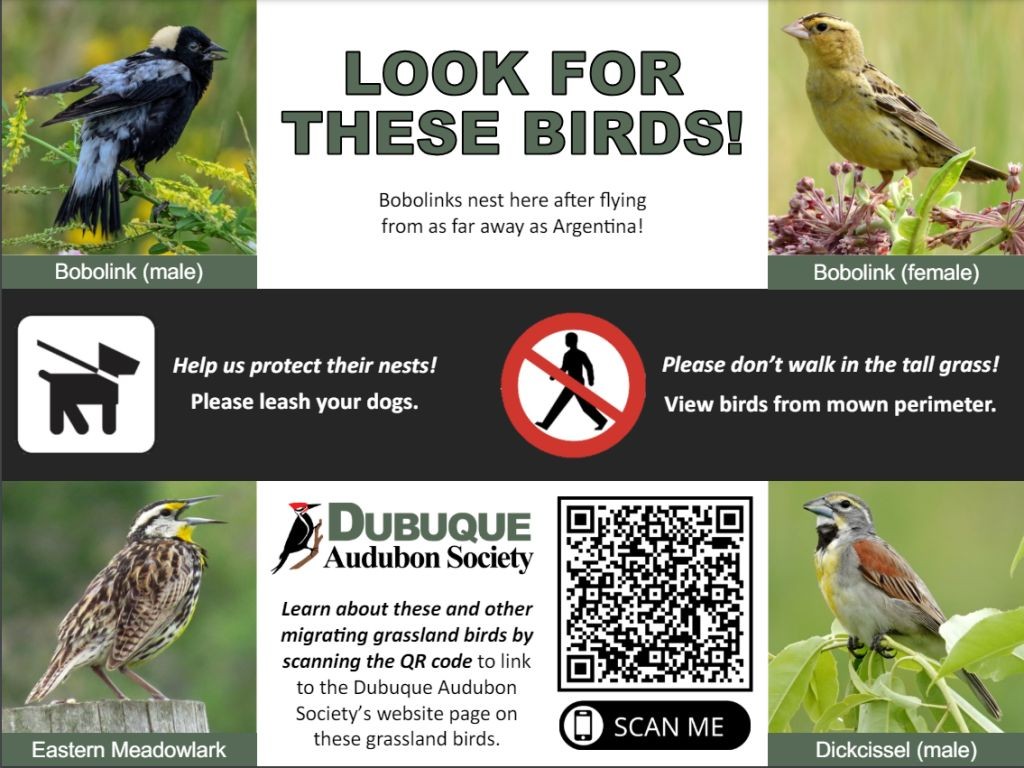
Grassland Bird Signs at Technology Park
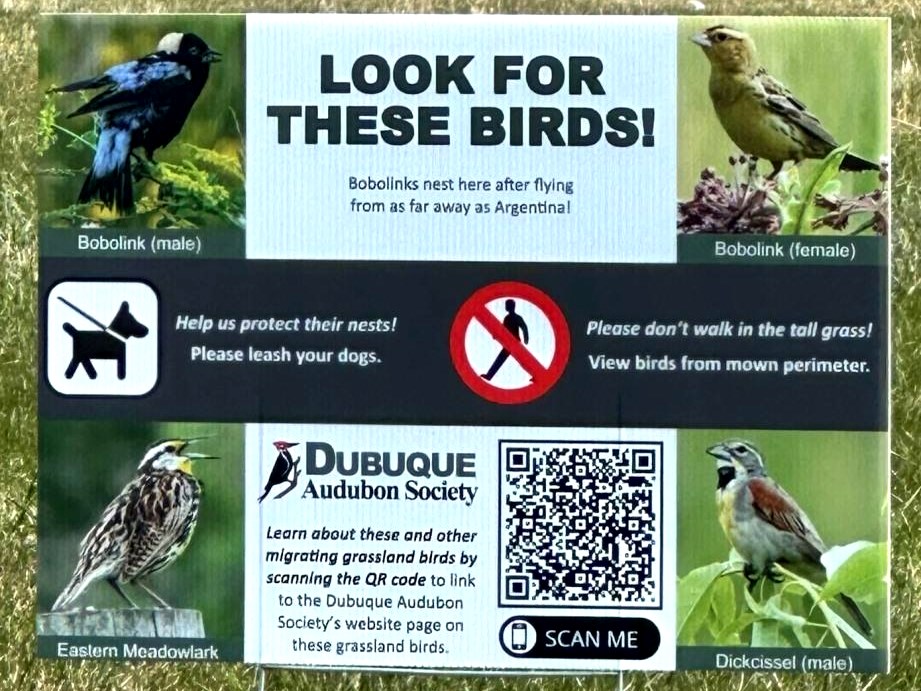
In 2024, with permission from the city of Dubuque, we created and installed educational signage at Technology Park in Dubuque for the purpose of the community’s enjoyment and information regarding the migrating grassland birds that nest in those fields. The signs also attempt to encourage people to not walk or run their dogs through the tall grasses, as that would disturb these nesting birds. Species such as Eastern Meadowlark, Bobolink, Grasshopper Sparrow, and Dickcissel are among the birds that nest there regularly beginning in late April and through August.
Unless/until the area is developed, we will seasonally post signs in the area to promote awareness of these birds. City officials will ensure that the current city mowing practices will continue, so undeveloped areas will not be mown during nesting season. Furthermore, if future development does occur, either it will be done outside of nesting season, or the grass will be mown immediately ahead of nesting season such that birds will not nest there.
We would like to thank Iowa Audubon and the LaVonne and Dale Foote Memorial Fund for awarding us a grant to cover the cost of the signs.
Mines of Spain SRA
5/1/25
© Ken Kiss
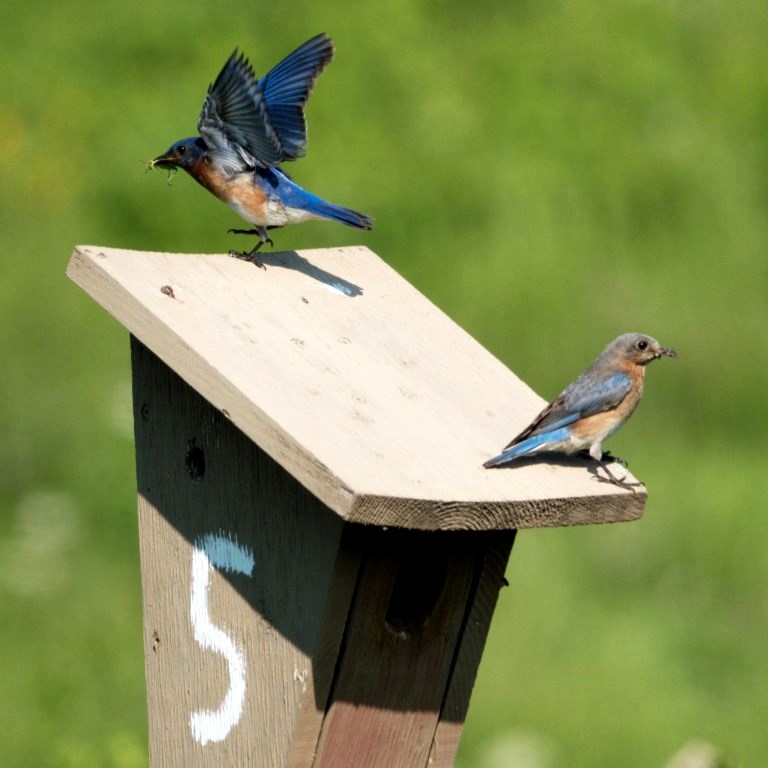
Mines of Spain SRA
7/8/23
© Marty Corfman
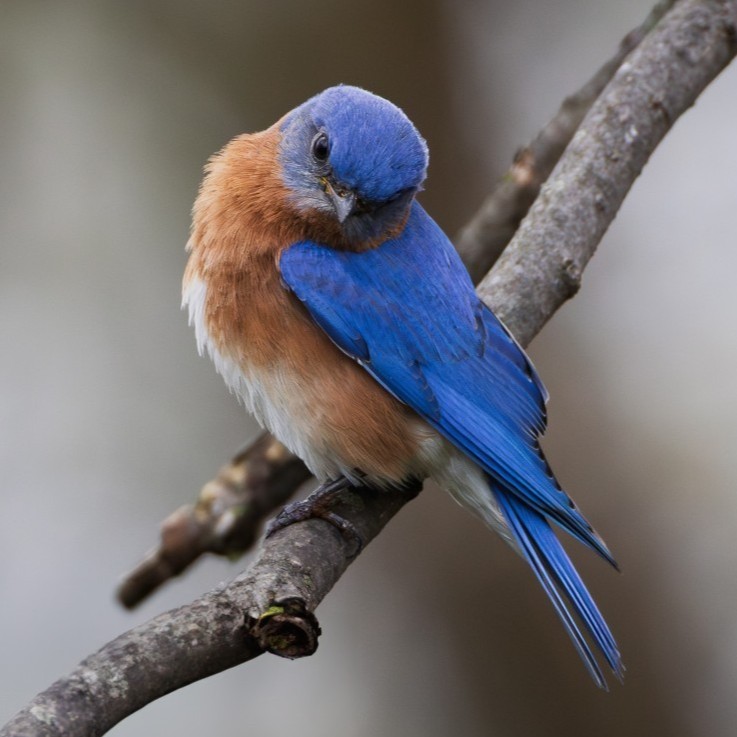
Bluebird Monitoring at Mines of Spain
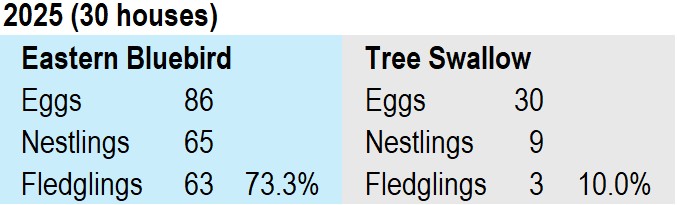
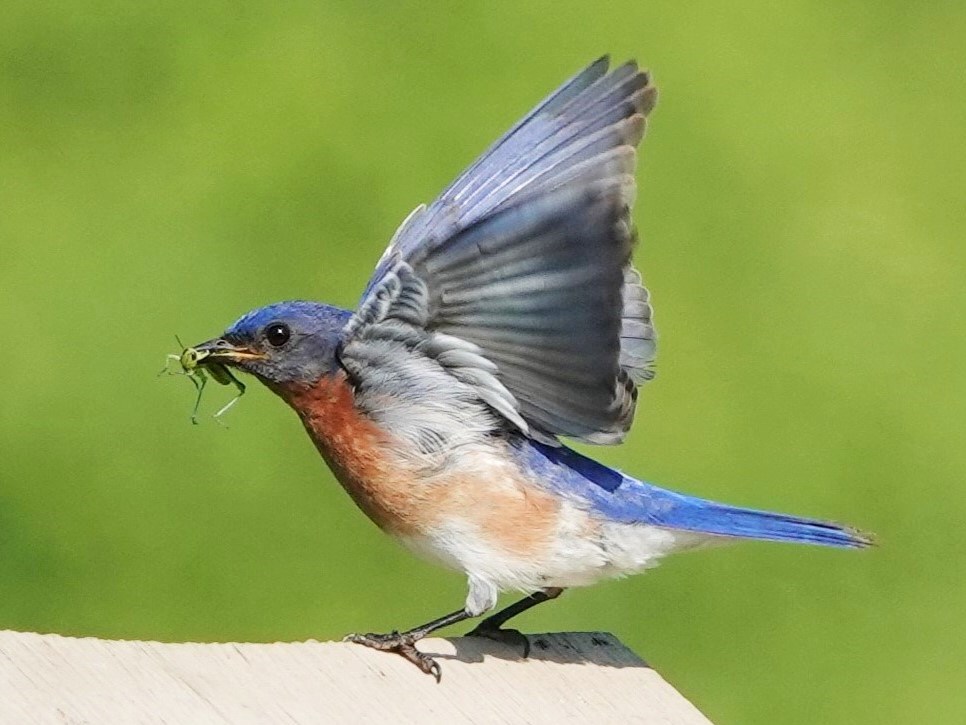
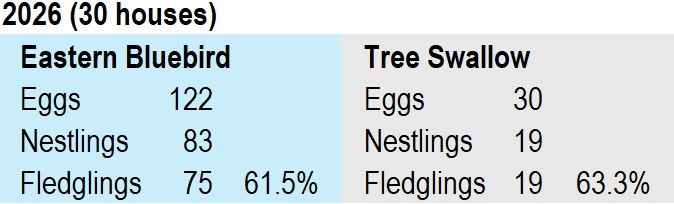
In 2021, Ken Kiss took over the responsibility of monitoring bluebird houses at the Mines of Spain. He added some houses in 2022, as well as in 2024 and 2025, funded by the DNR, Dubuque Audubon, and himself. He now maintains 30 houses which are checked weekly, either by him or additional volunteers.
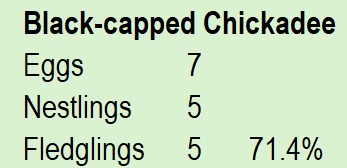
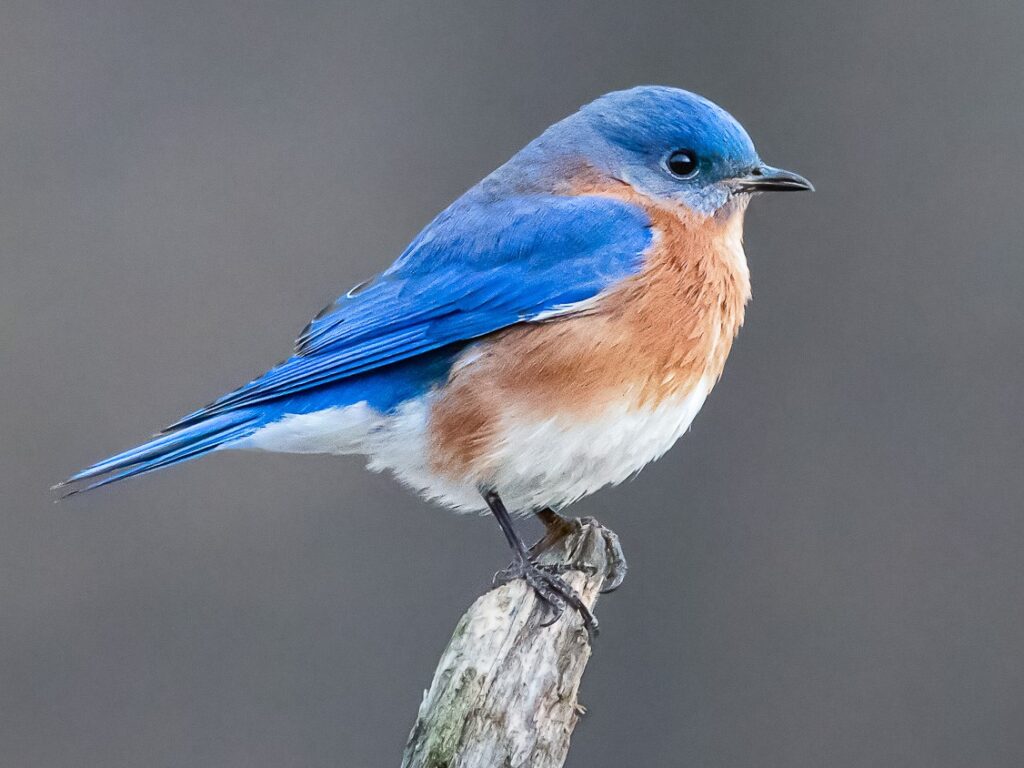
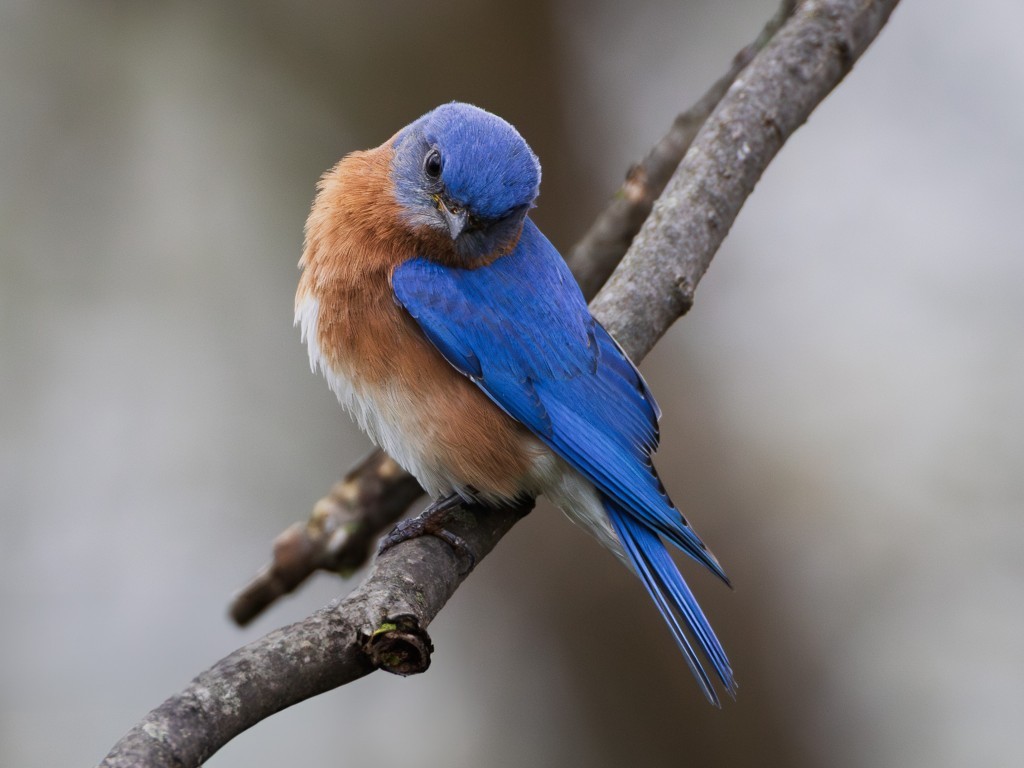
Helping Eastern Bluebirds is the goal, but Tree Swallows and Northern House Wrens are two other cavity nesters that use the houses. In 2021, Ken counted some Black-capped Chickadees. He does not track the Northern House Wrens, who actively use the boxes.
Please contact us if you might be interested in volunteering to monitor the boxes. Ken provides excellent training!
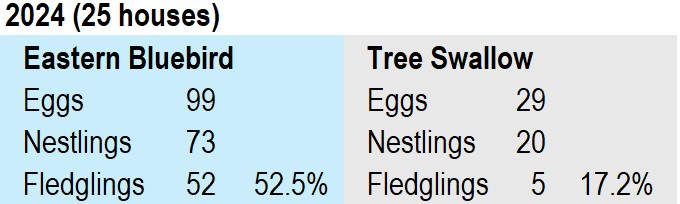
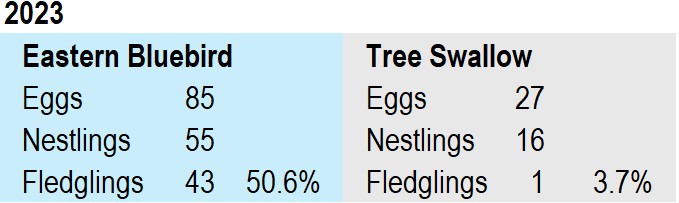
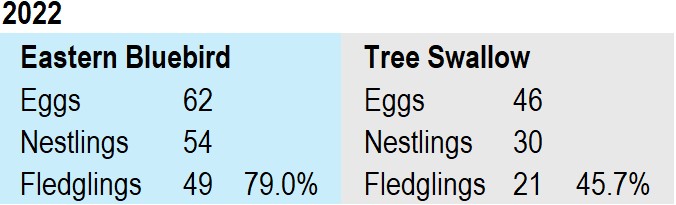
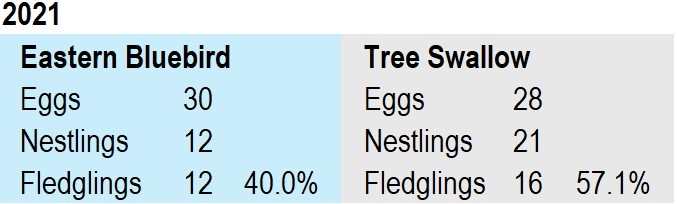
Results are below, including the fledgling/egg ratio each year:
See older results...
Bluebird Monitoring Posts
Bluebird Monitoring
[from fall 2026 newsletter]
This year we started monitoring Eastern Bluebirds at the Mines of Spain on April 19th and ended with one final check in late August. We try to monitor weekly during the breeding season but slow down our inspections in August when the nesting activity slows.
Bluebird Monitoring
[from fall 2025 newsletter]
It was another successful season for the bluebirds nesting at the Mines of Spain. This year Tom Davis and Galen Mathis joined me in monitoring 30 bird houses on a weekly basis.
Bluebird Monitoring
Christmas Bird Count
The National Audubon Society’s Christmas Bird Count is the longest running organized citizen science project in the United States! It began on Christmas Day in 1900, and today it happens in over 20 countries in the western hemisphere.
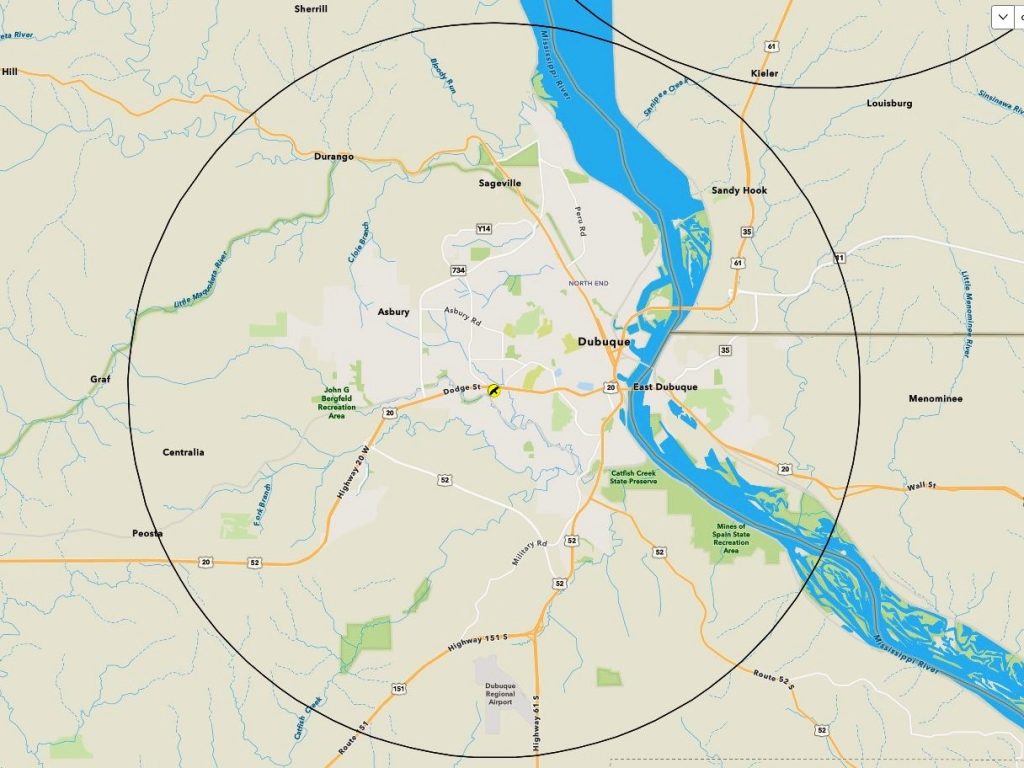
Each count takes place in an established 15-mile diameter circle, and the organizer picks a date in the range of December 14 to January 5. Dubuque Audubon’s circle is centered at Center Grove Cemetery, Dubuque, IA, and includes Swiss Valley, Mines of Spain, City of Dubuque, Western Dubuque, Deere Dike/north of Dubuque, Dubuque Airport, and western Grant County. Over the decades, Christmas Bird Count data has been used in hundreds of analyses, publications, and government reports.
CBC Posts
Christmas Bird Count
The USGS North American Breeding Bird Survey
The USGS (U.S. Geological Survey) Norther American Breeding Bird Survey (BBS) began in 1966 and has been completed across North America every summer since then, with the exception of 2020 when it was missed due to the COVID-19 pandemic. See the newsletter article below for details on the survey rules and the route that has been covered by someone from the Dubuque Audubon Society since 1967!
- 1967 – 2002: George Crossley
- 2003 – 2026: Bob Walton
- Beginning in 2027: Tony Moline
From fall 2026 newsletter:
The USGS North American Breeding Bird Survey
BY BOB WALTON
2026 marked the 60th anniversary of the USGS (U.S. Geological Survey) North American Breeding Bird Survey (BBS). Except for one year of missed data collection due to the COVID-19 pandemic, dedicated birders have collected data each summer since the survey began in 1966. The late George Crossley, a Dubuque Audubon member, began the survey route known officially as the Maquoketa BBS 36-017 Route in 1967.
The actual survey route was established by the United States Government Survey Office at the Patuxent Wildlife Research Center in Laurel, Maryland. This route is 25 miles long and begins just SE of Maquoketa and ends NE of LaMotte, Iowa. It winds along gravel backroads and paved roads, through wooded and agricultural land. The survey begins exactly ½ hour before sunrise with viewing and listening stops each ½ mile. The 50 stops are marked on a survey map and are repeated at the exact same locations every year. At each location, the survey recorder exits the vehicle and conducts a stationary point count of all birds seen or heard within a ¼ mile radius during a 3-minute count period. Any birds located before or after the 3 minutes or while travelling between stops cannot be counted. Absolutely no method of calling or coaxing birds can be utilized. The use of the popular Cornell Lab of Ornithology’s Merlin Bird ID app cannot be used to detect and identify birds during the BBS. The BBS has a strict rule that only the assigned observer is permitted to detect and identify birds along the route. An assistant may only help by doing the timing and recording of vehicles passing during the 3 minutes. All observers are required to have the independent ability to identify all birds in the area by sound and sight.
In an “index survey,” such as the BBS, the purpose is to compare results over years to measure changes in bird populations. To accomplish this goal, strict adherence to survey protocols is essential as they control factors that make birds numbers go up or down artificially, like weather conditions, count duration, and time of day.
I have truly enjoyed the past 23 years of doing this route since I took over for George Crossley in 2003. In that time, I have witnessed large population declines in the number of grassland birds, particularly Bobolinks, Meadowlarks, and all the grassland sparrows. Most of these declines have been due to residential encroachment and major changes in agricultural practices. On the positive side, I now see more Bald Eagles, Wild Turkey, Mourning Doves, and adaptable birds like Red-winged Blackbirds, House Wrens, Dickcissels, House Wrens, and Killdeer. New additions to my very first birding lists include Carolina Wrens, House Finches, Eurasian Tree sparrows, and Eurasian Collared Doves.
Due to my “aging hearing,” 2026 was my last BBS Survey. I have enjoyed birding in rural Jackson County and am happy that a Dubuque Audubon Society member, Tony Moline, will continue the tradition of Dubuque Audubon Society conducting this survey route. Anyone interested in taking over other routes may contact the U.S. Geological Survey’s Eastern Ecological Science Center in Laurel, Maryland, for routes available in our area.
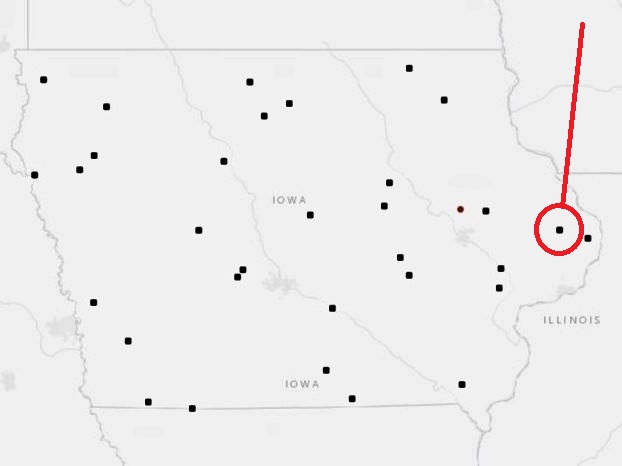
Iowa Route Map
Bob Walton
Bird Survey at Mount St. Francis Property
In July 2023, Dubuque Audubon began grassland bird surveys at Mount St. Francis property. Owned by the Sisters of St. Francis, the property is designated an Iowa Heritage Site and is closed to the public.
The property hosts a prairie of 90+ acres with around 80 acres enrolled in the Conservation Reserve Program. 12 acres of woodland and 56 acres of prairie have been placed in a conservation easement with the Iowa Natural Heritage Foundation.
Saint Francis Prairie (restricted access)
6/6/26
© Ken Kiss
Completed Projects
Bird Survey at Whitewater Canyon
In 2022, Dubuque Audubon started a 3-year study at Whitewater Canyon Wildlife Management Area, focusing on grassland bird populations.
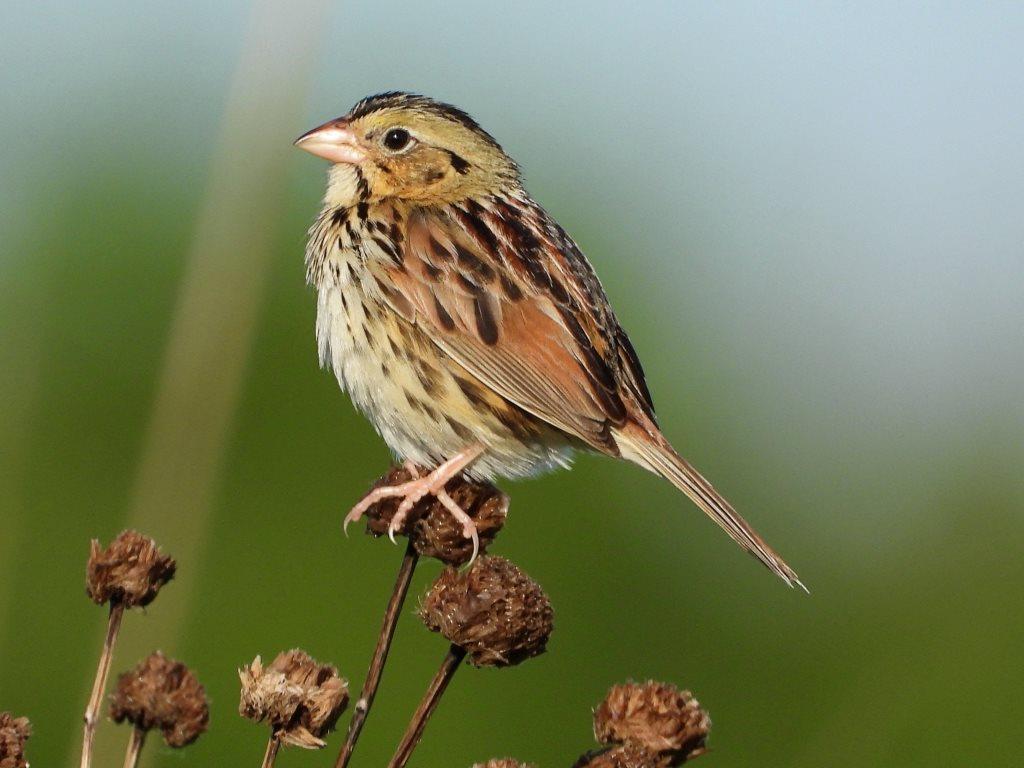
6 sites in the grassland areas were surveyed from mid-May through late June. Each site was monitored for approximately 10 minutes with special emphasis on identifying nesting grassland species of birds. Special attention was given to locating Henslow’s Sparrows, Grasshopper Sparrows, Bobolinks, and Sedge Wrens.
© Mary Leigh
Whitewater Canyon Wildlife Area
5/24/24
From August 2024 post:
Dubuque Audubon’s 3-year survey of grassland birds at Whitewater Canyon Wildlife Management Area is complete!
When the Whitewater Canyon property was purchased in 2006 by the Dubuque County Conservation Board, the majority of the surveyed area had been cropland of corn, alfalfa, and oats that was converted to a CRP mixture of brome grass, bird’s-foot trefoil, and alfalfa, with a small amount of prairie grass and forbes. Since the purchase, the Conservation Board has made yearly plantings of tall grass prairie and forbes to convert the entire area to prairie, thus providing better habitat for grassland birds. The primary objective has been to maintain the existing grasslands with a maximum diversity of prairie grasses and forbes. To encourage a diversity of wildlife, the Dubuque County Conservation Board instigated a management plan that involves a rotational burning of approximately 1/3 of the prairie grasslands each year. With rotational burning, the invasion of undesirable trees can be eliminated, and the diversity and density of the grasslands will promote grassland wildlife.
Throughout the 3 years of observation, the current management strategy of burning approximately 1/3 of the prairie each year has resulted in a stable population of the main “species of concern” grassland birds, especially the Henslow’s and Grasshopper Sparrows.
Additional Project Posts
(excluding some listed in earlier sections)
Surveys
[repeated in fall 2026 newsletter]
On June 6th, Dubuque Audubon members conducted a breeding bird survey on the Sisters of Saint Francis property in Dubuque.
Projects
[from summer 2026 newsletter]
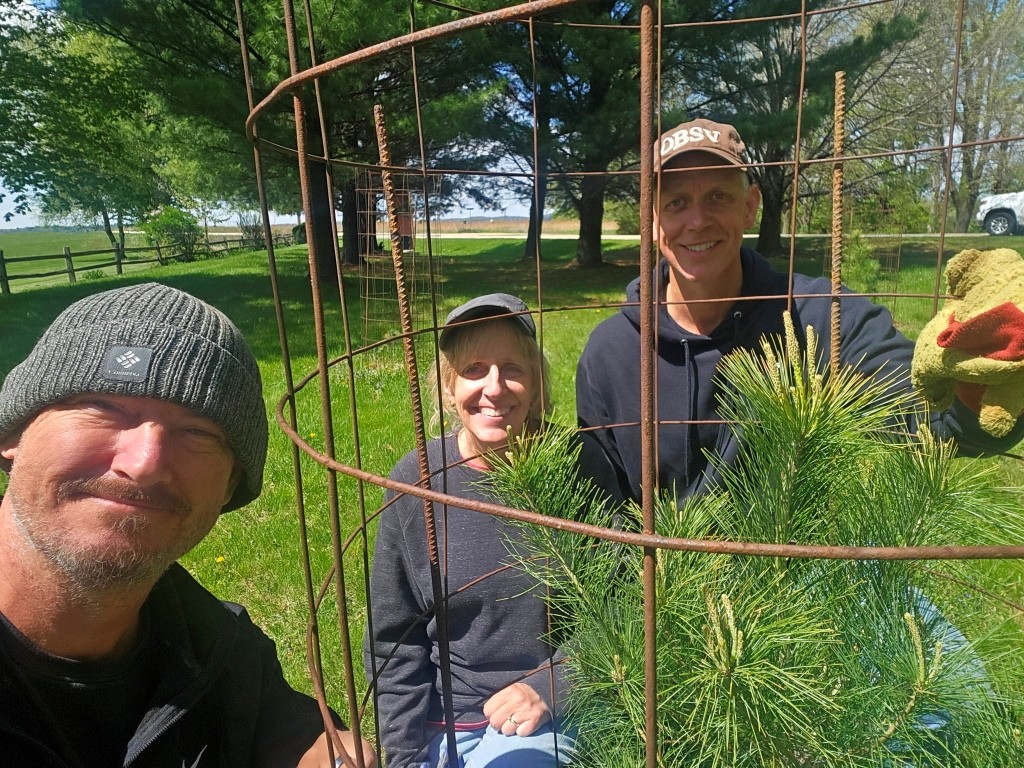
Dubuque Audubon purchased four 3-4' eastern white pine and two 2-3' white spruce for approved planting at Mines of Spain SRA.
Projects
Projects
Projects
Projects
Financial Contributions
Dubuque Audubon often makes donations to the organizations of our speakers.
In addition, we support local organizations including:
- donations to Swiss Valley Nature Center for bird seed